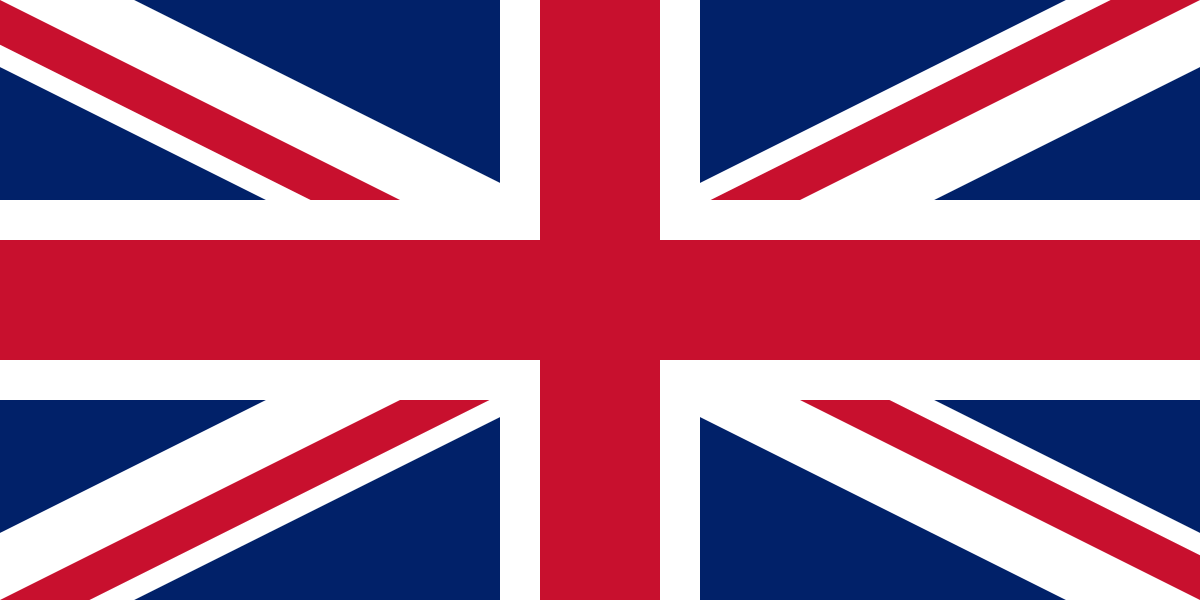
Overview
The United Kingdom has no single written constitution. Its law is common law — judge-made precedent — layered with Acts of Parliament, which are supreme. Three legal systems coexist: England & Wales, Scotland (partly civil-law), and Northern Ireland.
Legal system & tradition
Common law developed in England over centuries through court decisions; judges interpret statutes and are bound by higher-court precedent. Parliament is sovereign — it can make or unmake any law, and no court can strike down an Act, though courts interpret them and, since 1998, test them against human-rights standards.
Constitution & government
The constitution is “uncodified” — found across statutes (Magna Carta 1215, Bill of Rights 1689), conventions, and case law rather than one document. The Constitutional Reform Act 2005 created an independent Supreme Court, which began work in 2009.
Courts & disputes
Most cases begin in magistrates’ or county courts; serious matters go to the Crown Court or High Court, then the Court of Appeal. The UK Supreme Court is the final court for civil cases across the UK and for criminal cases from England, Wales and Northern Ireland.
Major branches of law
Rights & rule of law
Rights are protected by common law and statute, above all the Human Rights Act 1998, which gives effect to the European Convention on Human Rights in UK courts. Courts can declare legislation incompatible with rights, but Parliament keeps the final say.
Key milestones
Higher-risk & getting help
Solicitors handle most legal matters; barristers argue in the higher courts. Free guidance is available from Citizens Advice and, for those who qualify, legal aid. For urgent safety issues contact the police.
Official sources
About this profile
JusticeWiki profiles provide general legal orientation, not legal advice. Each section is reviewed and dated, and cites official sources so you can check the original. Found an error? Email us a correction and a reviewer will check it.